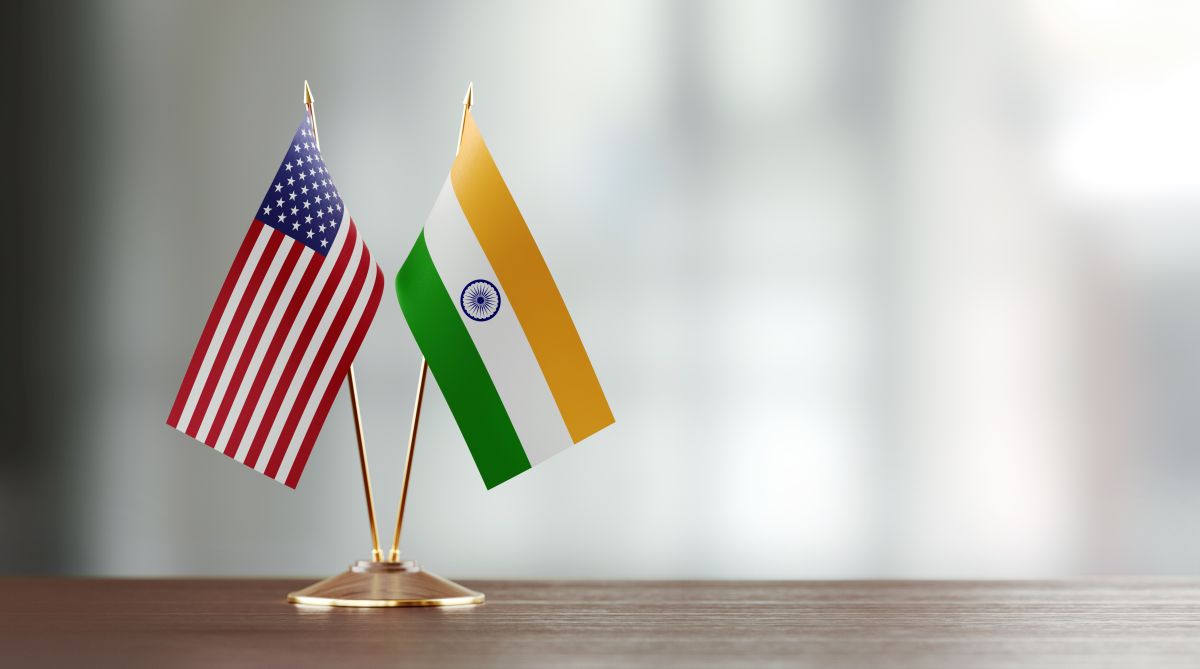
India and the United States remain actively engaged in discussions for a mutually beneficial trade agreement, the Ministry of Commerce and Industry said on Friday, dismissing media reports that suggested bilateral trade negotiations had been put on hold.
In an official statement, the Commerce Ministry clarified that engagement between the two countries continues and emphasised that both sides remain committed to advancing trade ties.
Advertisement
“We have noted a media report regarding ongoing trade talks with the US. It is denied that there is any hold in bilateral engagement. It is reiterated that the two sides remain engaged in pursuing a mutually beneficial trade agreement,” the ministry said.
The clarification comes amid ongoing negotiations between the two countries aimed at strengthening economic ties and resolving long-standing market access issues.
India and the United States last month announced that they had reached a framework for an interim agreement intended to advance reciprocal and mutually beneficial trade.
The framework reaffirmed both nations’ commitment to the broader US–India Bilateral Trade Agreement (BTA) negotiations, which were launched by US President Donald Trump and Prime Minister Narendra Modi on February 13, 2025.
According to a joint statement, the interim agreement is expected to mark a historic milestone in the economic partnership between the two countries and reflects a shared commitment to reciprocal and balanced trade based on mutual interests and tangible outcomes.
Under the proposed interim arrangement, India has agreed to eliminate or significantly reduce tariffs on all US industrial goods and a broad range of American agricultural and food products.
These include items such as dried distillers’ grains (DDGs), red sorghum used for animal feed, tree nuts, fresh and processed fruits, soybean oil, wine and spirits, along with several other products.
In return, the United States will apply a reciprocal tariff rate of 18 per cent on Indian-origin goods.
The tariff will cover sectors such as textiles and apparel, leather and footwear, plastic and rubber products, organic chemicals, home décor items, artisanal goods, and certain machinery.
However, subject to the successful conclusion of the interim agreement, the United States has indicated that it may remove reciprocal tariffs on a wide range of Indian exports, including generic pharmaceuticals, gems and diamonds, and aircraft components.
Meanwhile, in a separate development, the Trump administration has initiated fresh investigations into alleged “unfair trade practices” by 16 major trading partners, including India, China, and Bangladesh.
The move follows a ruling by the US Supreme Court last month that declared certain previously imposed tariffs illegal, prompting the administration to explore alternative measures to maintain trade pressure.
The investigations are being conducted under Section 301 of the Trade Act of 1974, which allows the United States Trade Representative (USTR) to impose tariffs or other penalties on countries deemed to be engaging in unfair trade practices.
The US Trade Representative indicated that the probes could lead to fresh tariffs on imports from several economies, including China, the European Union, India, Japan, South Korea, and Mexico, possibly by the summer.
The probe into global “excess capacity” also extends to several other economies such as Taiwan, Vietnam, Thailand, Malaysia, Cambodia, Singapore, Indonesia, Bangladesh, Switzerland, and Norway.
Notably, Canada, the second-largest trading partner of the United States, has been excluded from the list of countries under investigation.
Despite the fresh trade scrutiny by Washington, officials indicated that bilateral engagement between India and the United States remains constructive, with both sides continuing to work toward deeper trade integration and more resilient supply chains.
The ongoing negotiations are expected to address tariff barriers, market access, and supply chain cooperation, forming a key pillar of the broader strategic partnership between the two countries.